biotechnology
The biotechnology and medical device sector demands accelerated development cycles without sacrificing quality or regulatory compliance. At ProtoSpain, we understand that manufacturing prototypes for functional validation, pre-clinical testing, and short production runs of biomedical devices requires biocompatible materials, strict dimensional precision, and full traceability. We specialize in transforming innovative concepts into tangible prototypes that enable validation of functionality, geometry, and performance before critical investments in production tooling or clinical trials.
Why Biotechnological Prototyping Requires Maximum Specialization
The development of medical devices presents unique challenges that go beyond standard industrial prototyping. Devices must comply with strict ISO 10993 biocompatibility standards, ISO 13485 quality management systems, and specific requirements related to sterility and traceability. Prototype manufacturing requires the use of certified biocompatible materials, which limits the available material palette but ensures that testing accurately reflects final production behavior.
In addition, every prototype intended for pre-clinical validation or regulatory submission must generate exhaustive documentation: material certificates, biocompatibility reports, sterilization specifications, and manufacturing records under controlled traceability. The typical volume of small series—ranging from 5 prototypes for proof-of-concept validation to 50–100 units for pilot clinical studies—requires agile yet fully documented processes that ensure repeatability and safety without the need for investment in production tooling.
From Functional Prototype to Pre-Clinical Validation
Precision CNC Machining in Biocompatible Materials
CNC machining of components in titanium, stainless steel, or certified medical polymers provides prototypes with properties identical to final production parts, which is critical for early functional validation.
Technical capabilities for medical devices:
3- and 5-axis milling of biocompatible materials such as 316L stainless steel, Ti6Al4V titanium, and ISO 10993-certified PEEK to manufacture structural components, surgical guides, or interface connections
Guaranteed tolerances of ±0.05–0.02 mm on critical features where precision defines functionality—for example valve seats, fluid channels, or implant interfaces
Surface roughness Ra 0.8–1.6 µm directly from machining, adjustable through subsequent polishing for body-contact surfaces requiring ultra-smooth finishes
Specialized post-machining treatments: passivation of stainless steels according to ISO 3160-2 to improve biocompatibility, steam or gas sterilization without degradation of material properties
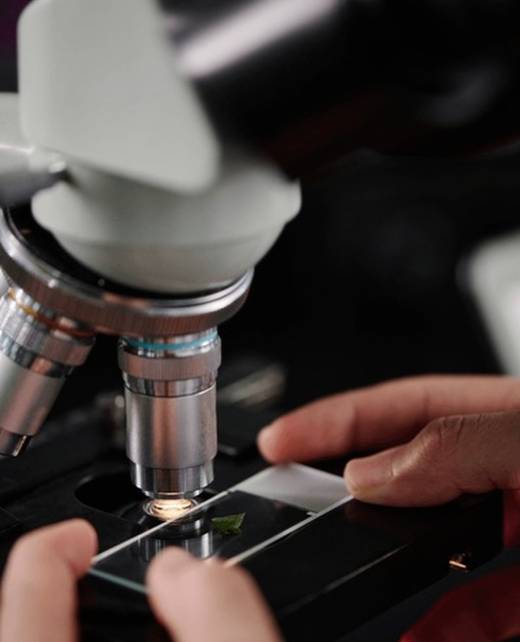
Prototypes for the biotechnology sector
Certified biocompatible materials:
Ti6Al4V titanium offers excellent biocompatibility, high corrosion resistance in bodily fluids, and minimal immune response, making it ideal for implants and devices in contact with bone or blood.
316L stainless steel provides high mechanical strength, low risk of nickel leaching, and is a standard material for surgical instruments and structural components of medical devices.
ISO 10993-certified PEEK (polyetheretherketone) combines radiolucency, thermal resistance, and mechanical properties close to bone, and is widely used in spinal and orthopedic implants.
Ultra-high-molecular-weight polyethylene (UHMWPE) offers excellent biocompatibility and wear resistance for joint prosthesis bearings.
Biotechnological application cases:
We manufacture prototype surgical instruments in 316L stainless steel with positional tolerances of ±0.02 mm for clinical testing, including ergonomically machined handles and reproducible functional tips.
For implantable devices, we prototype Ti6Al4V titanium components with full passivation treatment, validated sterilization, and ISO 10993 biocompatibility certification prior to in vivo studies.
For Impossible Geometries and Customized Devices
Direct Metal Laser Sintering (DMLS) enables the production of geometries that are impossible to machine—internal channels for fluid perfusion, porous structures for osseointegration, and patient-specific customized devices.
Experts in prototyping for biotechnology
Topology-optimized design: controlled porous structures for bone integration or vascularization without the need for additional coatings
Complex internal channels: drug delivery or nutrient perfusion pathways for tissue engineering applications
Customized devices: models based on patient-specific CT scans for guided surgery or bespoke prostheses
Low-density implants: optimized strength-to-weight ratios reducing mass without compromising critical mechanical properties
Component consolidation: integration of multiple functions into a single part, reducing failure points and improving biocompatibility
Biocompatible-certified Ti6Al4V titanium for bone and structural implants, 316L stainless steel for instruments and non-implantable components, and Inconel 718 for devices exposed to high temperatures or corrosive environments.
Printed materials undergo post-processing heat treatments to ensure mechanical properties and sterilizability.
We prototyped a titanium scaffold structure with controlled porosity (~50–60% interconnected voids) to validate osseointegration in an animal model, using DMLS to achieve geometry impossible with traditional milling.
A patient-specific surgical guide based on pre-operative CT data was printed in titanium and used in the operating room with millimetric accuracy and no increase in surgical time.
When 10–50 units in final material are required for functional testing or regulatory submission, SLA (stereolithography) 3D printing using biocompatible resins and SLS (selective laser sintering) using medical-grade polyamides provides speed without compromising properties.
Portable medical device housings in biocompatible SLA resin with mirror-like surface finish, ±0.1 mm tolerances, and direct sterilization by radiation or steam.
Connectors, suture guides, and secondary structural components in biocompatible SLS PA12, offering excellent repeatability across 20–50 parts from the same batch.
Flexible components and seals in biocompatible SLS elastomer (TPU) for medical valves or hermetic connections with certified biocompatibility.
We prototyped 30 units of a heart valve prototype: structural part in machined stainless steel, flexible part in biocompatible SLS elastomer, with hemolysis and thrombosis testing in animal models without costly serial production.
Prototypes for Safety and Biocompatibility Testing
Functional prototypes intended for pre-clinical validation must pass exhaustive testing programs demonstrating biological safety according to ISO 10993-1, compatibility with sterilization processes (steam, ethylene oxide, gamma radiation), and absence of toxic leachables.
We manufacture prototypes specifically for:
Biocompatibility testing: cytotoxicity, genotoxicity, dermal sensitization, and cellular apoptosis according to duration of bodily contact
Sterilization testing: validation of parts subjected to steam autoclave at 121°C, EtO gas, or gamma radiation while maintaining structural integrity and mechanical properties
Functional performance testing: repetitive motion tests (valve flexion-extension), corrosion resistance in bodily fluids (saline solution, blood), static and dynamic mechanical properties
In vitro and in vivo studies: prototypes for cell cultures, tissue models, and laboratory animal testing prior to human clinical trials
Each prototype includes material certificates with specific batch identification, a preliminary biocompatibility passport, CMM dimensional reports if required, documentation of surface treatments (passivation, sterilization), and photographic manufacturing records.
All documentation is generated under ISO 13485 standards to ensure that subsequent production series replicate exactly the conditions of the validated prototype.
Correct material selection defines device viability. At ProtoSpain, we advise on ISO 10993 Class VI materials (maximum biocompatibility) based on intended contact: skin, mucosa, blood, or permanent implantation.
Medical-grade silicone VSP-4 for permanent-contact components, passivated 316L stainless steel for reusable surgical instruments, implant-grade titanium for bone-contact parts, and PEEK for long-term implants without degradation.
Biocompatible LSR (liquid silicone rubber) elastomers for heart valves, vascular connectors, and flexible components with excellent biological tolerance.
ProtoSpain validates material–sterilization compatibility: for example, certain biocompatible SLA resins can be sterilized by radiation but not by steam without risk of depolymerization.
These incompatibilities are documented in specifications to prevent downstream regulatory failures.
For innovators improving existing devices, we offer 3D scanning of reference components, redesign optimized for manufacturability, and prototype printing of improved versions before investing in new tooling.
Typical cases:
Redesign of a threaded medical probe connector: FEA stress analysis identifies stress concentrators, geometric re-optimization in CAD, rapid prototyping of the improved titanium version with precise threading, and functional validation without delay.
Simplification of multi-part assemblies: component consolidation through metal 3D printing reduces manual assembly operations and accelerates disinfection between uses.
- Prototype surgical instruments in 316L stainless steel for ergonomic validation, steam sterilization, and biocompatibility testing, 10 units for early clinical trials.
- Patient-specific implantable component in Ti6Al4V titanium based on individual CT scan data, precision machined with ±0.02 mm tolerance, passivated and gamma-sterilized with full documentation.
- Prototype surgical guide in biocompatible PEEK for in vitro and in vivo pre-clinical testing, high-resolution SLA 3D printing with polished finish, 30 units for animal model studies.
- Multi-material heart valve prototype: machined stainless steel + biocompatible SLS elastomer, hemolysis and thrombosis validation, in vitro coagulation testing prior to animal trials.
- Medical connector combining titanium and resin, SLS prototyped for repetitive mechanical coupling tests, hermetic sealing resistance under pressure, and certified biocompatibility for sterilizable reuse.
Experience in medical regulation:
We understand ISO 10993 and ISO 13485 requirements, as well as FDA and CE approval processes, enabling us to design prototypes that transition smoothly into regulatory validation.
Certified biocompatible materials:
We work exclusively with titanium alloys, stainless steels, and 3D printing resins certified under ISO 10993, ensuring that prototypes exactly replicate the biomedical behavior of final production parts.
Critical tolerances and surface finishes:
Our CMM dimensional control and specialization in passivation and polishing ensure that critical surfaces meet exact biomedical specifications.
Full traceability:
Each prototype generates exhaustive documentation including material certificates, surface treatment records, physical test results, and preliminary biocompatibility analyses.
Specialized technical consulting:
Our engineers guide material selection, sterilization process definition, and testing strategies to accelerate regulatory approval without costly surprises.
Speed without sacrificing safety:
Machined functional prototypes in 3–5 days and validation series in 1–2 weeks enable rapid iteration prior to investment in production tooling.
Are you developing a medical device that needs to move from concept to pre-clinical validation? Do you require prototypes in biocompatible materials with full regulatory documentation and ISO 13485 traceability?
Our biomedical engineering team analyzes your design, validates certified materials, optimizes geometry for manufacturability and regulatory compliance, and provides a detailed quotation and timeline within 24 hours.
Contact our biotechnology prototyping specialists and accelerate your path to clinical trials with prototypes that meet the strict safety, biocompatibility, and traceability requirements demanded by regulators. We transform medical innovation into tangible validation.