


automotive industry
High specialization is one of ProtoSpain’s core strengths, and it is precisely in the automotive sector where the company has accumulated the most experience. ProtoSpain works closely with its commercial partners, developing the perfect product from the prototype stage through short-run production.
Additive Manufacturing of Automotive Components
In the Spanish automotive sector, rapid prototyping and additive manufacturing have revolutionized vehicle development. This is not just about accelerating processes, but about completely transforming how ideas come to life in modern automotive industry.
Spain, as the fourth-largest automotive component manufacturer in Europe, is leading this technological transformation that is redefining innovation standards across the sector.
Rapid Automotive Prototyping: The Automotive Development Revolution
Automotive prototyping has become the engine of innovation in an industry where every component matters. A modern vehicle integrates tens of thousands of parts, from air diffusers to complete dashboard assemblies, and each one requires exhaustive validation before reaching series production.
Technology That Makes the Difference
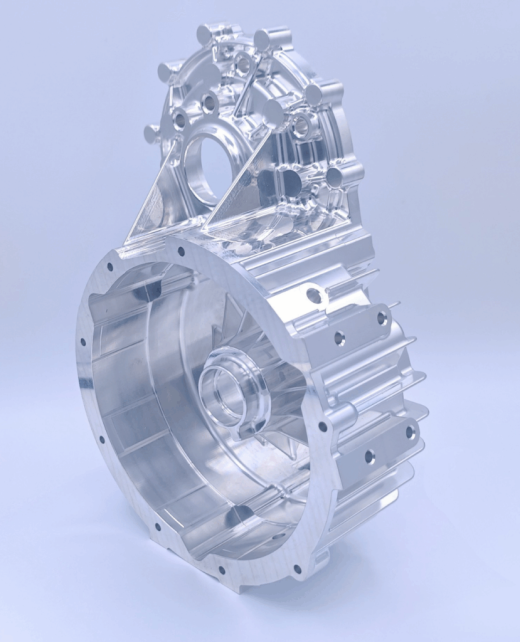
At PROTOSPAIN, we have spent more than a decade perfecting automotive prototyping techniques. Our infrastructure speaks for itself: more than 450 CNC machining centers, including 10 five-axis machines, 50 SLA machines, and 10 SLS systems. This production capacity allows us to tackle any challenge within the automotive sector.
3D printing for automotive enables the creation of complex geometries impossible to achieve with traditional methods, significantly reduces development times, and optimizes material usage. This technology has proven essential in the development of functional automotive prototypes.
.
Automotive Components: From Interior to Exterior
Interior applications
Instrument panels with professional finishes
Central consoles with integrated functionalities
Customized ambient lighting systems
Air diffusers with optimized aerodynamic geometries
Development of Automotive Exterior Elements
Exterior elements define both the personality and functionality of the vehicle:
Headlamps and tail lamps with precision optics
Front grilles with exclusive designs
Automotive bumpers adapted to specific regulations
Rapid Automotive Prototyping:
Competitive Advantages
This responsiveness is critical in automotive design, where changes are constant, driven by energy efficiency, safety requirements, and market expectations.
Success Stories in Automotive Additive Manufacturing
BMW has revolutionized the industry by using 3D printing not only for prototypes, but also for final production parts. The BMW i8 Roadster includes 3D-printed components developed in just five days.
Volkswagen has achieved a 91% cost reduction and a 95% reduction in manufacturing time by using additive manufacturing technologies. From wheel guards to precision gauges, each application demonstrates the transformative potential of these technologies.
Advanced Materials for Automotive Prototyping
Material selection in automotive prototyping is crucial to validate not only form, but also function:
ABS for durable interior components
Nylon for flexible applications
Aluminum for lightweight structural parts
Titanium for high-performance components
High-performance resins for specific applications
Automotive Prototyping Services
Functional prototyping enables validation not only of designs, but also of real-world performance of automotive components. This capability is essential for:
- Aerodynamic validation of exterior components
- Resistance testing under real operating conditions
- Weight and material optimization
- Integration of electronic functionalities
Industry 4.0 in Automotive Prototyping
The integration of artificial intelligence, IoT, and advanced robotics is transforming automotive production plants. This evolution enables compliance with growing customization demands while advancing toward higher sustainability standards.
Additive manufacturing is no longer limited to prototyping; by 2025, broader adoption in series production is expected. Companies are overcoming traditional barriers by integrating 3D printing into production processes with faster, more reliable, and scalable solutions.
- End-to-End Automotive Prototype Manufacturing
- As specialists in automotive prototyping in Asturias, we offer:
- SLA/SLS rapid prototyping for design validation
- Precision CNC machining for functional prototypes
- Vacuum casting for short production runs
- Professional finishes with series-level quality
The ability to produce on demand and create customized parts is revolutionizing not only new vehicle development, but also the spare parts market and limited-edition manufacturing.
The Spanish automotive sector is leading the democratization of additive technologies, leveraging decades of experience in automotive component manufacturing.
At PROTOSPAIN, we understand that every automotive prototyping project is an opportunity to demonstrate that technical excellence and innovation can go hand in hand with tight deadlines and competitive costs. Because in the end, it’s not just about making automotive prototypes. It’s about bringing tomorrow’s mobility to life.
Interior
- Instrument panels
- Center consoles
- Door panels
- A/B/C pillars
- Ambient lighting
- Air vents
- Engine cooling system
- Vehicle seats
- Structural parts
Exterior
- Lighting: headlamps and tail lamps (lenses, reflectors, light guides, housings, collimators, etc.)
- Front radiator grilles
- Front and rear bumpers
- Exterior mirrors
- Badges
Automotive lighting is no longer merely functional. It has become the visual soul of every vehicle, the first impression that defines a brand’s identity, and a critical element for road safety. This is where our expertise comes in: transforming lighting concepts into tangible realities, taking prototypes from design to road-ready solutions that make a difference.
Beyond Illumination: The LED Revolution in Motion
The days of simple halogen bulbs are long gone. The sector is experiencing an unprecedented transformation, with matrix LED headlamps, laser technologies, and adaptive systems completely redefining what it means to “see and be seen” on the road.
We are talking about systems capable of reaching up to 600 meters with laser technology, LED matrices with up to 10,000 individual pixels creating intelligent light patterns, and headlamps that literally “think” and adapt in real time to driving conditions. This is a technological universe where every lens, every reflector, and every housing demands absolute precision.
The Art of Materializing Optical Perfection
When an automotive manufacturer delivers its drawings, we don’t design from scratch. We do something equally complex: translating those technical specifications into physical components that perform exactly as envisioned. And in automotive lighting, there is no margin for “almost perfect.”
Precision lenses machined in PMMA or PC requiring crystal-clear transparency.
Aluminum reflectors with mirror finishes that maximize every emitted lumen.
Housings that withstand extreme vibrations and harsh thermal changes.
Cylindrical light guides just 7–10 mm in diameter that distribute LED light with mathematical uniformity.
Every component goes through manufacturing processes where details make the difference: progressive polishing from coarse sanding to liquid polishing compounds, 5-axis CNC machining for complex surfaces using tools down to R0.1 mm, and surface finishes reaching Ra 0.2 µm.
Technologies We Master, Results That Speak
Our technological arsenal ranges from ultra-precision CNC machining to SLA 3D printing for impossible geometries. We work with rapid injection molding for pre-series, vacuum casting (silicone mold casting) for small batches, and a combination of traditional and advanced technologies that allow us to create prototypes indistinguishable from production parts.
The result? Functional prototypes that not only meet technical specifications, but also allow our clients to validate real optical performance, evaluate complex assemblies, and demonstrate concepts to stakeholders with the confidence of holding a fully functional final-like component.
Trends Defining the Future
The market does not stand still. ADB (Adaptive Driving Beam) headlamps are expected to grow from 3.7% market penetration in 2022 to 17% in 2027. Mini LED rear lights with pixel-by-pixel brightness control are already a reality. Lighting systems that communicate with pedestrians and project information onto the road are no longer science fiction.
And we are here to materialize each of these innovations. Because between a brilliant concept and the final product, there is a world of engineering, precision, and expertise that makes the difference between a good idea and a commercial success.
When innovation needs shape, we give it life.