Surface Finishes: Transforming the Piece from Basic to Premium
Technical Section: The Art and Science of Surface FinishesA part can be perfectly manufactured in terms of dimensions, tolerances, and functionality. But if it comes out of the mold or oven with a rough, dull, or oxidized surface, the perception is completely different. Surface finishes are what transform a technical part into a premium product.
At ProtoSpain, we understand that finishes are not "vanity." They are both functional and aesthetic:
Functionality: A polished finish reduces friction in assemblies. Anodizing protects against corrosion. Industrial paint resists corrosive environments. A matte texture reduces glare in optics.
Aesthetics: In a consumer device, the finish is what the customer "sees and touches" first. It defines the perception of quality.
Durability: Properly applied finishes extend the lifespan of components by decades, versus corrosion that destroys them in years.
Here is the technical breakdown of what each finish is, how it is applied, which materials it tolerates, and when to choose each one.
Family 1: Abrasive Finishes (Polishing, Shot Blasting, Sandblasting)
These processes use abrasive particles to modify the surface.
1. Shot Blasting / Grit Blasting
Technical Process
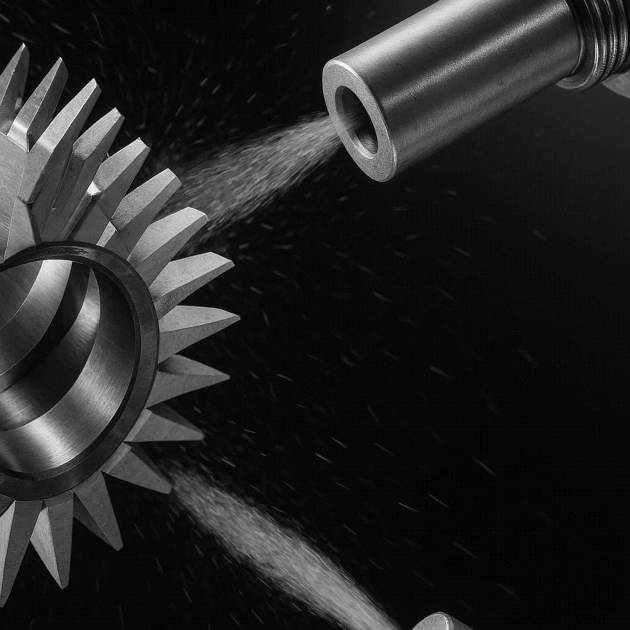
How it works: Spherical steel particles (shot) or ceramic pellets are projected at high pressure against the workpiece. Typical speed: 50–100 m/s.
Particles: steel (reusable thousands of times), ceramics (disposable, for specific finishes).
Critical parameters:
Particle size (SAE J444: S330, S390, S550, S660, S780 — higher numbers = larger particles).
Air pressure (0.5–1 MPa typical).
Exposure time (seconds to minutes, depending on the desired effect).
Nozzle distance (15–50 cm typical).
Achieved Effects
Surface cleaning: removes rust, slag, and casting or mold residue.
Matte finish: creates a uniformly matte surface (typical Ra 3.2–6.3 µm).
Preparation for other finishes: shot blasting prepares the surface for painting or anodizing (improved adhesion).
Stress relief: the impact of particles generates small plastic deformations that relieve internal stresses (an important phenomenon in cast or forged parts subjected to stress).
Compatible Materials
Metals: aluminum, steel, cast iron, copper, brass. Excellent on all.
Plastics: possible on some (ABS, polystyrene), but requires care (low pressure, soft particles).
Not recommended: delicate plastics, fragile materials that may crack on impact.
Typical Applications
Automotive: engine parts before painting.
Metal structures: beams, steel structures before galvanizing.
Medical devices: surface preparation before anodizing or electropolishing.
Industrial components: any metal part requiring rust removal.
Advantages
Fast (minutes).
Economical (reusable particles in a closed blasting machine).
Versatile (adjustable pressure, particle size, and time).
Excellent for deep cleaning.
Disadvantages
Uniform matte finish, not mirror polished.
Requires post-processing for a glossy finish.
Generates dust/noise (requires contained equipment).
Typical Cost
€2–€8 per piece (depends on size, exposure time).
2. Sandblasting
Technical Process
Identical to shot blasting, but using silica sand (or alternatives such as ground glass, slag) instead of steel.
- Particles: SiO₂ (sand), ground glass (less harmful to lungs), copper slag.
- Advantage vs shot blasting: more controllable, finer finish, less aggressive on base material.
Key Differences vs Shot Blasting
Aspect | Shot blasting | Sandblasted |
|---|---|---|
Particle | Spherical steel | Silica sand |
Aggressiveness | High | Moderate-Low |
Accuracy | Deep uniform matte | Finest matte |
Particle reuse | Yes (thousands of times) | No (not out of the question) |
Cost | Medium | Higher (constantly buys sand) |
Health/Safety | Better | Risk of silicosis if not controlled |
Best for | Robust metal part | Fine finish, delicate materials |
Applications / Use cases
- Optics: preparation of glass surfaces before coating.
- Sensitive plastics: shot blasting would be too aggressive.
- Fine finishes: when you’re looking for a delicate matte, not a “brutal” one.
Typical Cost
€3–€10 per piece (more expensive due to sand cost, but more controlled result).
3. Manual and Mechanical Polishing
Technical Process
Sanding pads or discs made of felt or cloth impregnated with abrasives (aluminum oxide, silicon carbide) are used on a rotary or hand-held machine.
Speeds: Typically 500–3,000 RPM.
Grit Progression: Start with coarse grit (P80–P120) and gradually refine (P240, P400, P800, P1200, P2000+).
Final Finish: Ra can reach 0.1–0.4 µm (mirror polish).
Polishing Stages
Roughing (P80–P120): Removes machining marks and coarse oxide.
Intermediate (P240–P400): Smoothes surfaces.
Semi-final (P800): Prepares for final polishing.
Final (P1200–P2000+): Achieves a mirror-like shine. Typical time: 30 minutes to several hours per piece (depending on size and desired finish).
Compatible Materials
Metals: aluminum, steel (including stainless steel), copper, brass. Excellent.
Plastics: acrylic, polycarbonate, polystyrene. Possible, but requires careful temperature control (friction generates heat and can deform the plastic).
Achieved Effects
Matte Polish: Ra 1.6–3.2 µm (matte appearance, without aggressive reflections).
Semi-gloss polish: Ra 0.4–0.8 µm (intermediate finish).
Mirror polished: Ra 0.1–0.2 µm (perfect mirror reflection).
Typical Applications
Precision optics: lenses that require maximum clarity.
Premium components: luxury equipment, consumer electronics that you can see.
Decorative accessories: pieces where appearance is central.
Sales samples: when you need to show "the best" to the customer.
Advantages
Total control over the final finish.
It can be made to measure (if you want more shine, you continue polishing).
Superior result in terms of appearance.
Disadvantages
Time intensive: hours of labor.
High cost: €20–€100+ per piece typically.
Requires skill: experienced polisher gives better results.
It is not a "permanent finish": without protection (e.g., anodizing), the polished piece will rust/tarnish over time.
Typical Cost
€20–€80 per small piece, more for larger pieces. Significant total cost in volume.
Family 2: Chemical Finishes (Electropolishing, Passivation, Pickling)
These processes use chemical solutions to remove the superficial oxide layer, impurities, or to leave the surface protected.
4.Electropolishing
Technical Process
Principle: the part is placed as the anode in an electrochemical cell. When current flows, the surface layer dissolves selectively, leaving a polished surface.
Electrolyte: typically phosphoric acid + sulfuric acid (or variants depending on the alloy).
Parameters:
Voltage: typically 10–20 V.
Current: depends on part surface area.
Time: typically 5–30 minutes.
Temperature: controlled at 40–60 °C.
Advantages Compared to Manual Polishing
Uniformity: reaches all surfaces, including recesses and holes.
Speed: minutes instead of hours.
Perfect finish: Ra 0.05–0.2 µm achievable (better than manual polishing).
Stress relief: electropolishing also relieves internal stresses (important for welded or stress-machined parts).
Deep cleaning: removes oxide and surface inclusions.
Compatible Materials
Stainless steels: primary use. Electropolishing of stainless steel is an industry standard.
Aluminum: possible, but requires a different electrolyte and tighter control.
Copper, brass: possible but less common.
Plastics: not compatible (non-conductive).
Typical Applications
Medical/surgical instruments: more efficient sterilization on polished surfaces.
Pharmaceutical components: prevents surface particulate contamination.
Piping for critical systems: elimination of microparticles.
Stainless steel valves and fittings: premium finish with maximum corrosion resistance.
Advantages
Best possible finish (molecular mirror).
Reaches complex surfaces.
Fast (minutes).
In addition to polishing, provides protection (reinforced passive layer on stainless steel).
Disadvantages
Costly equipment (electrochemical cell, controller, power supplies).
Not all suppliers offer it.
Material must be conductive (metals, not plastics).
Typical Cost
€15–€50 per part (more expensive than blasting, less than manual polishing for extreme finishes).
5. Passivation (Pasivado)
Technical Process
Concept: immersing stainless steel in an acidic solution (typically diluted nitric acid HNO₃) to remove iron contaminants from the surface.
Duration: 20–30 minutes.
Temperature: ambient to 50 °C.
Post-processing: thorough rinsing with demineralized water.
What Happens Chemically
Stainless steel contains chromium (~18%), which naturally forms chromium oxide (Cr₂O₃), an invisible protective film. However, during machining or handling, iron fragments (from tools, chips) can remain on the surface. These iron fragments oxidize (rust), locally destroying the protection.
Passivation removes this iron, allowing chromium to re-form its protective film. Result: truly stainless steel, not prone to localized corrosion.
Critical Applications
Implantable medical devices: passivation is mandatory (ISO 13485 standard).
Surgical instruments: ensures corrosion resistance.
Aerospace components: compliance with AMS (Aerospace Material Specification) standards.
Food industry: equipment in food contact requires passivation.
Advantages
Does not change dimensions (gentle chemical process).
Invisible (does not change appearance, only protects).
Significantly improves corrosion resistance.
Certifiable (ASTM A967 or equivalent).
Disadvantages
Requires access to chemical equipment (controlled bath).
Acid handling (safety considerations).
Moderate cost.
“Invisible”: the customer does not see it, but it is critical for durability.
Typical Cost
€2–€8 per part (economical, but essential in medical/aerospace).
6. Pickling
Technical Process
Immersing the part in a strong acid (typically diluted hydrochloric acid HCl or sulfuric acid H₂SO₄) to remove oxide, scale, or other casting/forging contaminants.
Duration: minutes to hours (depending on oxide thickness).
Temperature: 40–60 °C.
Safety: acid handling, critical ventilation.
| Process | Purpose | Material | Acid |
|---|---|---|---|
| Passivation | Removes contaminating iron, reinforces protective film | Specifically stainless steel | Soft HNO₃ |
| Pickling | Remove coarse oxide and slag; prepare surface | Any metal (carbon, stainless steel, copper) | HCl and H₂SO₄ are more aggressive |
- Post-casting: removal of scale and casting oxide.
- Post-forging: removal of black forging oxide.
- Preparation for galvanizing: pickling is a mandatory preliminary step.
- Recovery of oxidized parts: if a part has oxidized, pickling “revives” it.
- Removes deep oxide that blasting/sandblasting cannot reach.
- Economical (simple acid bath).
- Fast (hours).
- Requires chemical control (acid concentration, temperature).
- Embrittlement: acids can embrittle certain steels (requires “pickling neutralization”).
- Chemical waste generation (disposal required).
General Properties
- Density: 1.18–1.19 g/cm³.
- Melting point: ~160°C (but it softens earlier).
- Injection temperature: 210–250°C.
- Transparency: crystal clear, very transparent (rivaling optical glass).
- Rigidity: moderate to high.
- UV resistance: excellent.
Peculiarities of Injection
- “Sensitive” material: requires very precise temperature control. A variation of 5–10°C can ruin optical properties.
- Low contraction: ~0.5–0.8%.
- The cavity must be mirror-polished: any scratch on the mold will be reflected in the part. That’s why molds for PMMA need finishes with Ra < 0.4 µm (vs. typical Ra 0.8–1.6 µm).
- “Brittle” material: tends to have visible weld lines. If fluxes are in a critical area, a “scar” will be visible on the part (functionally OK, visually a problem).
- Long cycles: material takes a long time to cool, cycles of 30–50 seconds.
- It is not solvent-resistant: many solvents attack PMMA. It cannot be cleaned with acetone, toluene, etc.
Real-World Use Cases
- Clear optics: lenses, diffusers, translucent screens.
- Components that need transparency + rigidity (car headlights, architectural applications).
- Laboratory and scientific equipment.
Cost
Medium. Typically €4–€6 per kg. More expensive than PS due to superior optical properties.
Technical Process
- Concept: immersing steel in molten zinc (400–500 °C) to create a zinc–steel alloy layer.
- Thickness: typically 40–100 µm (depending on the steel).
- Duration: seconds to minutes (rapid immersion).
- Parameters
- Zinc temperature: typically 840 °C.
- Pre-treatment: pickling (HCl) to remove oxide, followed by flux (Zn-Cl) to prevent oxidation during transfer.
Resulting Coating
It is not “painted zinc” but a zinc–steel alloy formed by a metallurgical reaction. The coating is:
- Multilayer: Zn–Fe alloy layers grow from the surface inward, ending with a pure Zn layer.
- Extremely adherent: does not peel or flake (unlike paint).
- Self-healing: if the coating is damaged, the surrounding zinc acts as a sacrificial anode, protecting the steel.
Advantages
- Extreme durability: galvanized steel lasts 30–50 years, versus unprotected steel that would rust in just a few years.
- Self-healing: minor damage “repairs itself” through zinc sacrificial action.
- Low maintenance: almost none after galvanizing.
- Cost-effective long term: low initial protection cost with very long service life.
Disadvantages
- Matte/rough finish: not aesthetically pleasing (dark gray, with typical process spangles).
- Variable thickness: surface is not smooth (may affect critical tolerances).
- No color customization: galvanized gray is the only option.
- Post-processing if aesthetics are required: painting over galvanized steel is possible (additional cost).
Typical Applications
- Outdoor structures: towers, bridges, steel structures in marine/desert environments.
- Industrial components: outdoor equipment, supports, frames.
- Water pipes: hot and cold water.
- Agricultural fittings: equipment designed to withstand weather exposure.
Typical Cost
€10–€40 per part (depending on size and thickness). Often contracted by volume in batches.
Technical Process
- Concept: the part (cathode) is immersed in a hexavalent chromium solution, with a chromium anode, under DC current. Chromium is deposited as a thin layer.
- Thickness: typically 5–10 µm (very thin, but sufficient).
- Duration: 15–30 minutes.
- Parameters
- Voltage: 3–6 V.
- Current density: 50–100 A/dm².
Pre-requisites: Plating Layer Stack
Chrome plating requires a nickel base underneath for proper adhesion:
- Copper plating: 5–10 µm copper (for regular geometry).
- Nickel plating: 10–30 µm nickel (base layer for chrome).
- Chrome plating: 5–10 µm chromium (visible protective layer).
Total thickness: 20–50 µm (much thinner than galvanizing).
Advantages
- Bright finish: mirror-like, reflective. Premium aesthetics.
- Colors: bright chrome, matte chrome, black chrome (variants).
- Dimensional precision: thin coating, does not affect critical tolerances.
- Moderate corrosion resistance: suitable for non-aggressive environments.
Disadvantages
- Toxicity: hexavalent chromium is toxic (strict environmental regulation).
- High cost: multi-layer process, chemical handling, costly equipment.
- Brittleness: the chrome layer is brittle under impact (can chip if struck).
- Not self-healing: unlike zinc, damaged chrome does not self-repair.
- Moderate lifespan: typically 5–10 years if protected, less under abrasion.
Alternative: Trivalent Chrome (Cr³⁺)
Environmental regulations are pushing the industry toward trivalent chromium (Cr³⁺), which is less toxic, but:
- Less bright finish (more matte).
- Fewer variant options.
- Still under development in some markets.
Typical Applications
- Decorative components: automotive bumpers, bathroom accessories, premium tools.
- Consumer electronics: buttons, metallic details.
- Luxury accessories: vintage machinery, jewelry, sports equipment.
Typical Cost
€15–€50 per part (high, multi-layer process).
- Industrial Painting
Technical Process
Painting consists of depositing a polymeric coating, typically with several components:
- Base coat: corrosion protection, color.
- Epoxy or polyurethane layer: hardness, flexibility.
- Top coat (clear): UV protection, gloss.
Main Variants
Acrylic Paint (Lacquer):
- Fast drying (minutes to hours).
- Good flexibility.
- Matte or glossy finish.
- Low cost.
- Moderate durability (5–10 years in favorable environments).
Epoxy Paint (2-component):
- Slow curing (hours to days).
- Extreme hardness.
- Superior chemical resistance.
- Medium cost.
- High durability (10–20 years).
- Requires mixing two components before application.
Polyurethane Paint:
- Balanced properties: hardness + flexibility.
- Good UV resistance (does not fade).
- Very glossy finish.
- Medium–high cost.
- High durability (15–25 years).
Special Industrial Paints:
- Thermochromic: changes color with temperature.
- Fluorescent: bright neon effect.
- Metallic: metallic effect (aluminum, copper, gold).
- Anti-reflective: absorbs light (optics).
Application Steps
- Surface preparation: cleaning (blasting, degreasing), oxide removal.
- Primer: base layer for adhesion.
- Base paint: color and corrosion protection.
- Clear top coat: gloss and UV protection.
Advantages
- Color versatility: virtually any color possible.
- Variable cost: very economical (acrylic) to moderate (epoxy/polyurethane).
- Ease of repair: damaged areas can be repainted.
- Customizable finish: matte, semi-gloss, glossy.
Disadvantages
- Variable durability: depends on paint quality and environment.
- Maintenance: requires repainting every 5–15 years (depending on type and climate).
- Low thickness: protection is a thin layer (vs thick galvanizing).
- Adhesion critical: poor surface preparation leads to peeling.
- Environmental risks: VOCs (volatile organic compounds) in conventional paints.
Typical Applications
- Automotive: bodywork, interiors.
- Consumer electronics: housings, frames.
- Industrial equipment: machines, frames.
- Art/custom: collectible parts, design objects.
Typical Cost
€2–€15 per part (economical, varies widely depending on paint type and finish).
Processes that create specific textures or special functionality on the surface.
- Mechanical Texturing (Mold-Tech, VDI, Custom)
Technical Process
Molds are manufactured with engraved textures, or texture is applied to the part as a post-process:
- In-mold (for plastics/casting): the texture is engraved into the mold cavity. The part comes out directly textured.
- Post-process: a fine abrasive is applied in a controlled pattern, or the texture is “stamped” onto the surface.
Types of Textures
|
Type |
Description |
Application |
|---|---|---|
|
Mold-Tech |
Industry standard, fine line/dot patterns (VDI A1.1–A3.2) |
Functional components, automotive interiors |
|
VDI (Verband Deutscher Ingenieure) |
German standard system, precise specifications (A1, A2, A3, B, C, etc.) |
European molds, exact specification |
|
Custom |
Custom texture (logos, unique patterns) |
Premium products, brand identity |
|
Matte |
Diffuse matte texture (Ra 1.6–3.2 µm) |
Consumer goods, electronics, glare reduction |
|
Granular |
Fine granulation (orange-peel simulation) |
Housings, pleasant tactile finishes |
Advantages
- Functionality: reduces glare (optics), improves grip (ergonomics).
- Aesthetics: hides fingerprints, conceals minor defects, delivers a “premium” feel.
- Production: in-mold execution, no additional post-processing.
Disadvantages
- In-mold: texture must be designed in advance (changing it later is costly).
- Post-machining difficulty: if a textured part requires machining, maintaining the texture is complex.
Typical Applications
- Electronic housings: smartphones, laptops.
- Automotive interiors: dashboards, trim panels.
- Optical components: glare reduction.
- Luxury items: textured finish = premium perception.
Typical Cost
€0 additional if in-mold (included in the mold). If applied as a post-process, €3–€10 per part.
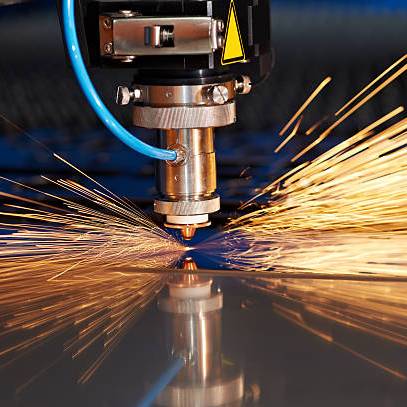
Technical Process
A CO₂ or fiber laser focused to a small point burns/vaporizes the surface layer of the material, creating a pattern.
- Depth: typically 0.1–1 mm (surface-level).
- Precision: excellent (sharp lines, very small text possible).
- Speed: very fast (seconds to minutes per part).
Compatible Materials
- Metals: steel, aluminum, copper, brass. Excellent.
- Plastics: acrylic, POM, nylon. Possible.
- Wood, leather: excellent (common application).
- Not compatible: glass (laser refraction), some delicate plastics (they melt).
Typical Applications
- Identification: serial numbers, batches, QR codes.
- Permanent marking: logos, text, technical information.
- Decoration: patterns, surface art.
- Traceability: tracking in industrial systems.
Advantages
- Permanent (does not fade with time or washing).
- Very fast.
- Excellent precision.
- Multiple colors with some lasers (or white-on-black contrast).
Disadvantages
- Limited depth (no deep engraving).
- Some materials not compatible.
- Edge burning (may appear matte if not properly controlled).
Typical Cost
€1–€5 per part (very economical, especially at volume).
Screen Printing
Ink transfer process through a mesh.
- How it works: a mesh with an ink stencil is pressed against the part, transferring the ink.
- Ink thickness: typically 50–200 µm (visible, textured).
- Colors: special inks available (metallic, fluorescent, etc.).
Pad Printing
A more flexible process for complex geometries.
- How it works: a silicone pad picks up ink from an engraved plate and presses it onto the part.
- Advantage: reaches geometries that screen printing cannot.
- Ink thickness: 10–50 µm (thinner than screen printing).
Comparison
|
Aspect |
Screen Printing |
Pad Printing |
|---|---|---|
|
Accuracy |
Good |
Excelent |
|
Shape complexity |
Flat/smooth surfaces |
Complex surfaces, recesses |
|
Set-up cost |
Low–Medium |
Medium |
|
Minimum volume |
100+ parts |
50+ parts |
|
Ink thickness |
Thicker (more visible) |
Thinner (more elegant) |
|
Colors |
Multiple possible (layered) |
Usually 1–2 colors |
Typical Applications
- Branding: logos, company names.
- Information: instructions, warnings.
- Decoration: artistic designs.
Typical Cost
€0.50–€2 per part (economical; setup overhead for molds/stencils ~€100–€300).
DLC (Diamond-Like Carbon)
- Concept: an amorphous carbon coating that mimics diamond properties.
- Properties: extreme hardness (harder than chrome plating), very low friction coefficient.
- Applications: cutting tools, high-wear components.
- Cost: high.
CeraKote
- Concept: a ceramic coating (originally used in firearms, later adopted by industry).
- Properties: exceptional hardness, corrosion resistance, customizable colors.
- Applications: components subjected to extreme abrasion, premium finishes.
- Cost: very high (specialized process).
PVD (Physical Vapor Deposition)
- Concept: evaporation/ionization of material (titanium, chromium, etc.) deposited as a thin coating.
- Properties: high hardness, excellent adhesion, glossy finish, color options (gold, black, bronze).
- Applications: jewelry, luxury accessories, precision components.
- Cost: medium–high.
Advantages
- Extreme hardness, very long durability.
- Customizable colors.
- Premium finish.
Disadvantages
- High cost.
- Specialized equipment.
- Limited availability.
Typical Cost
€20–€100+ per part (highly specialized).
Here is a practical guide to choosing the right finish based on material, function, and budget.
|
Need |
Material |
Recommended Finish |
Why |
Cost |
|---|---|---|---|---|
|
Maximum corrosion protection |
Steel |
Galvanizing |
30–50 years durability, self-healing |
Low–Medium |
|
Maximum corrosion protection |
Aluminum |
Type III Anodizing |
Extreme hardness, 20–30 years |
Medium |
|
Premium bright aesthetics |
Any metal |
Chrome Plating or Polishing |
Mirror-like appearance |
Medium–High |
|
Balance between aesthetics and function |
Metal |
Colored Type II Anodizing |
Protection + color |
Medium |
|
Marine environment |
Stainless steel |
Passivation + Electropolishing |
Extreme corrosion resistance |
Medium |
|
Stainless steel |
Inoxidable |
Electropolishing + Passivation |
Biocompatibility, sterilization |
Medium–High |
|
Low-cost cleaning |
Oxidized metal |
Blasting + Pickling |
Fast, economical |
Very Low |
|
Visible component |
Aluminum/Plastic |
Epoxy/Polyurethane Painting |
Color, basic protection |
Low–Medium |
|
Automotive interior |
Plastic/Metal |
Matte texturing |
Aesthetics, glare reduction |
Very Low (in-mold) |
|
Permanent identification |
Any metal |
Laser engraving |
Traceability, sharp marking |
Very Low |
|
High-wear component |
Metal |
DLC or PVD |
Extreme hardness, low friction |
High |
|
Precision optical component |
Glass/Acrylic |
Electropolishing or Mirror Polishing |
Maximum clarity |
Medium |
Often, a single finish is not enough. Here are the recommended combinations:
Aluminum Casting → Plastic Injection
Typical sequence:
- Blasting (cleaning).
- CNC machining (critical surfaces).
- Type II anodizing (protection).
- Painting (color if required).
Total time: 1–2 weeks post-casting.
Additional cost: €15–€30 per part.
Sequence:
- Pickling (oxide removal).
- Electropolishing (polishing + stress relief).
- Passivation (corrosion protection).
- Optional: painting or DLC (if required).
Total time: 2–3 days.
Additional cost: €20–€50 per part.
Sequence:
- Electropolishing (minimum roughness, stress relief).
- Passivation (maximum corrosion resistance).
- Laser engraving (traceability, serial number).
Total time: 2–3 days.
Additional cost: €25–€60 per part.
Sequence:
- Light blasting (cleaning, matte texture).
- Type II anodizing (color: black, gold, red).
- Clear top coat (UV protection).
- Screen printing / Pad printing (logo, branding).
Total time: 3–5 days.
Additional cost: €8–€20 per part.
Finishes are not “the last step” in the chain. They are integrated from the mold/process stage.
In Prototype Mold (Plastic)
- Textures are designed into the cavity (Mold-Tech, VDI).
- Basic finishes: natural matte, glossy, semi-gloss.
- Post-processing: manual polishing (specific areas), painting if required.
In Aluminum Casting
- Finishes begin post-casting.
- Blasting (mandatory, cleaning).
- Post-casting machining (if critical tolerances are required).
- Anodizing (protection + color).
- Laser engraving (traceability).
In Plastic Injection
- Finishes are mainly defined in the mold (texture, gloss).
- Post-processing: manual polishing (if a premium surface is required), painting (if special color is needed), screen printing (branding).
In Series Mold
- Mold design includes finishes (textures, runner systems optimized for gloss).
- Minimal post-processing if the mold is properly optimized.
Q: Can I change the finish after the first batch?
A: It depends on the type of finish.
- Post-process finishes (blasting, painting, anodizing): very easy. You can simply apply a different finish. Low additional cost.
- In-mold finishes (textures): impossible to change after production. The texture is engraved in the cavity. To change it, a new mold is required (costly).
Recommendation: choose the in-mold finish/texture from the start. Post-process finishes can be adjusted easily later.
Q: What is the most durable finish for a marine environment?
A: It depends on the material.
- Steel: galvanizing (30–50 years) > epoxy paint (10–15 years).
- Aluminum: Type III anodizing (20–30 years) > polyurethane paint (15–20 years).
- Stainless steel: passivation + electropolishing (indefinite if kept clean).
In extreme marine environments, combining two finishes is common, e.g. galvanizing + epoxy paint = 40–60 years.
Q: Does the finish affect dimensional tolerances?
A:
- Blasting, sandblasting: adds 0–0.1 mm (negligible for standard tolerances).
- Electropolishing: removes 0.01–0.05 mm (small, but noticeable for tolerances < ±0.1 mm).
- Type II anodizing: adds 10–20 µm (0.01–0.02 mm).
- Type III anodizing: adds 25–100 µm (0.03–0.1 mm) — critical.
- Galvanizing: adds 40–100 µm (0.04–0.1 mm).
- Chrome plating: negligible (<5 µm).
Recommendation: if tolerance is critical (< ±0.05 mm), inform the supplier before applying the finish. Some parts are pre-machined accounting for coating thickness.
Q: Can stainless steel be anodized?
A: No. Anodizing is specific to aluminum.
Stainless steel’s equivalent is passivation, which reinforces the chromium oxide layer without adding thickness.
If color is required on stainless steel, options include:
- Painting (less durable).
- PVD (costly, but excellent results).
- Natural patina (controlled oxidation, only for certain applications).
Q: Difference between manual polishing and electropolishing?
A:
|
Aspect |
Manual Polishing |
Electropolishing |
|---|---|---|
|
Accuracy |
Ra 0.1–0.2 µm (both excellent) |
Ra 0.05–0.1 µm (slightly better) |
|
Recesses |
Difficult to reach small holes |
Reaches all areas |
|
Time |
Hours (labor-intensive) |
Minutes |
|
Cost |
€20–€100 per part |
€15–€50 per part |
|
Stress relief |
No |
Yes (additional, important) |
|
Material |
Any machinable metal |
Conductive materials only (metals) |
|
Setup |
Minimal (polishing discs) |
Requires electrochemical cell |
Choice: if electropolishing is available, it is superior. Otherwise, manual polishing is still excellent.
Q: What finish should I use on a prototype if I don’t yet know the final one?
A: Recommendation: use a reversible intermediate finish.
- Blasting: cleans, provides a pleasant matte finish, not “final” but allows visual evaluation. Low cost.
- Basic painting: color, easy to change/repaint. Low–medium cost.
- Natural Type II anodizing: good appearance and resistance; can later be repainted. Medium cost.
Avoid in prototypes: costly electropolishing, expensive chrome plating if changes are likely, and highly specialized finishes (DLC, Cerakote).
Q: Is passivation necessary on stainless steel if the part will never contact food?
A: Technically, no. But it is still recommended even without food contact.
- Reasons: passivation removes iron contaminants that cause localized “pinhole corrosion,” even in non-extreme environments.
- Cost: low (€2–€4 per part).
- Benefit: long-term durability assurance and peace of mind against premature corrosion.
At ProtoSpain, we recommend passivation as a standard for stainless steel. It’s a safe choice with minimal cost impact.
A part is the sum of function, tolerance, material, and finish. Skipping finishes is like buying a premium car without paint: it works, but no one would call it premium.
At ProtoSpain, we understand that:
- Finishes are not luxuries; they are part of the technical specification.
- Choosing the right finish extends component lifespan by decades, versus corrosion that can destroy them in months.
- Finish combinations optimize cost–benefit (e.g., blasting + painting = affordable protection; vs Type III anodizing alone = higher cost but extreme durability).
- Documenting finishes from the beginning avoids late surprises in budget or schedule.
That’s why, on every project, we work with you to choose the optimal finish:
- Function: What environment? Expected wear? Chemical contact?
- Aesthetics: Color? Gloss? Texture? Branding/logos?
- Budget and timeline: How much can you invest? How fast do you need it?
- Material: Aluminum? Steel? Stainless steel? Plastic?
With this information, we recommend the finish (or combination) that maximizes durability, appearance, and value per euro invested.
The finish is the first thing people see. Make it memorable.