Skip to content Skip to footer
Vacuum Casting

Silicone Mould Injection for Precision Prototypes

Vacuum casting for batches of 10–50 parts with injection-moulding quality.
Resins that replicate production plastics.Validation, showcases, and certifications. Free quote!

Vacuum Casting: The Bridge Technology Between Prototype and Production

When you need multiple identical units of your prototype but are not yet ready to invest in a steel mould, vacuum casting is where the magic happens. This process combines the speed of 3D printing with the reliability of traditional injection moulding, allowing you to manufacture 10 to 50 functional parts in just one to two weeks.
It is the technology of choice when you need to validate a design, prepare samples for commercial presentations, pass certification tests, or simply put into the hands of real users a product that looks and feels like the final version.

At ProtoSpain, we have perfected this craft—from manufacturing the master pattern to the expert selection of polyurethane resins that faithfully replicate your production plastics. We know that at this stage of development there is no room for “almost”: every copy must be as good as the last, with no variation and no surprises.

What Does Vacuum Casting Involve? — Detailed Technical Process

Vacuum casting is a manufacturing process that uses elastomeric silicone moulds to replicate parts from a master prototype. The key lies in its name: vacuum. By pouring polyurethane resin into the mould under negative pressure, air bubbles are completely eliminated, resulting in solid, homogeneous parts with no internal defects or porosity.

The Step-by-Step Process

  1. Master Pattern Manufacturing

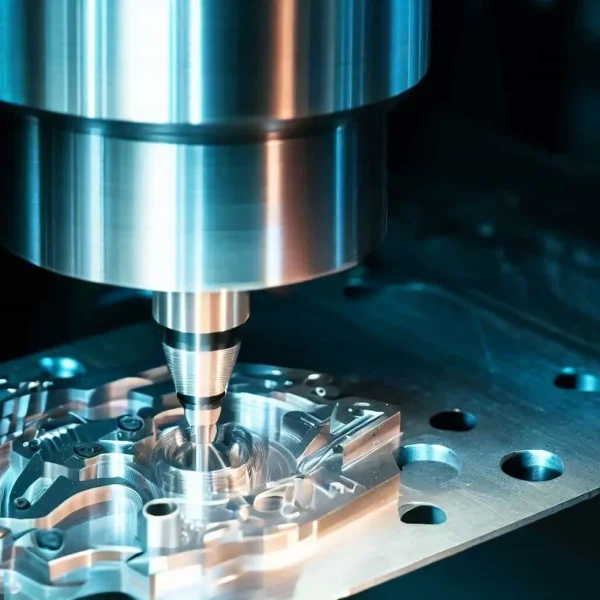
Everything begins with a high-quality master pattern. This is usually a 3D-printed part (preferably SLA with a polished finish) or a machined component. The master serves as the perfect negative from which all replicas will be produced, so we invest the necessary time to make it flawless: sanded, painted if required, and fully prepared to be reproduced without variation.

If you already have a prototype that meets the requirements, perfect. If not, we manufacture it in-house using the most suitable method based on your geometry and tolerance requirements.

  1. Silicone Mould Creation

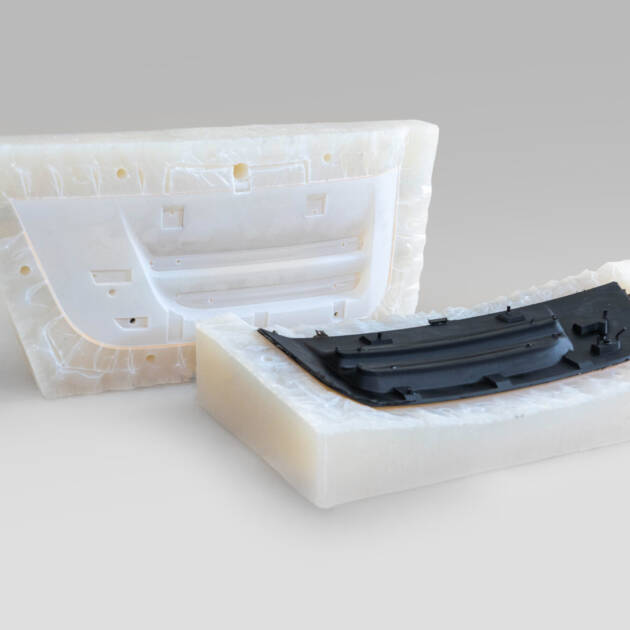
We build a mould around the master pattern using high-fidelity RTV (Room Temperature Vulcanizing) silicone, a material that is poured in liquid form and cures at room temperature (or with mild heat) within a few hours. The silicone captures every detail—textures, reliefs, and complex angles.
Thanks to its natural elasticity, it allows the reproduction of undercuts that would be impossible with rigid steel moulds, all without damaging the master pattern.

Depending on the geometry, the mould is designed in one or two halves to facilitate subsequent demoulding. A well-made silicone mould typically performs between 15 and 25 casting cycles before the silicone begins to fatigue or tear.

  1. Polyurethane Resin Selection

This is where we customise your project. We offer specialised polyurethane resins with different properties:

  • Rigid resins (70–85 Shore D): Simulate ABS, polycarbonate, or polypropylene. Ideal for technical housings, structural supports, and mechanical validation prototypes.
  • Flexible resins (30–70 Shore A): Replicate elastomers and soft rubbers. Suitable for deformable components, dampers, and seals.
  • Transparent resins: Virtually identical to PMMA or transparent polycarbonate. Ideal for optical parts, displays, and visual components.
  • High-temperature resistant resins: Some resins withstand temperatures of up to 120–150 °C, making them ideal for thermal validation testing.
  • Reinforced resins: With glass microfibre or mineral fillers for increased stiffness.

We can even pigment the resin in bulk in any RAL or NCS colour, or produce multiple batches from the same mould using different resins.

  1. Vacuum Casting

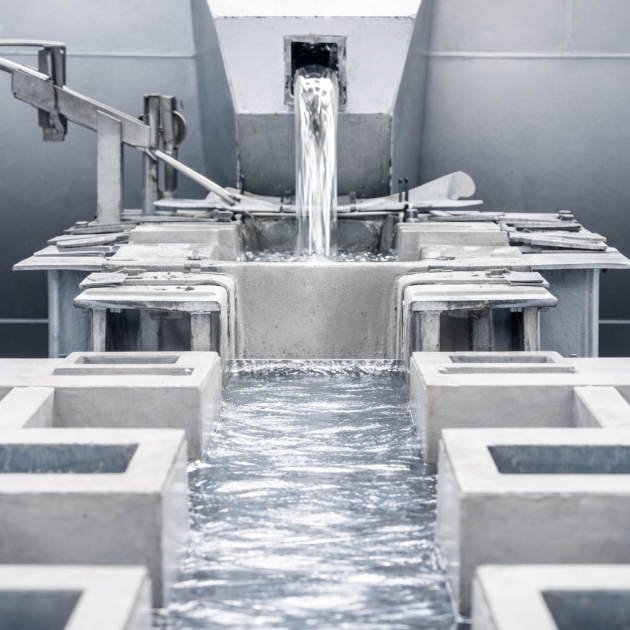
We prepare the two-component resin (base resin + catalyst) with the selected pigment, then pour it into the mould inside a vacuum chamber. The vacuum suction removes every air bubble, ensuring the resin fills even the smallest details of the cavity.
This step is critical: without vacuum, parts would contain porosity and exhibit poor surface finish. With vacuum, the results are flawless.

Depending on the resin, polymerisation takes between 30 minutes and 2 hours.

  1. Demoulding and Finishing

We open the silicone mould (slowly and carefully) and remove the freshly cast part. In most cases, only minimal finishing is required: removing the sprue (the channel through which the resin entered) and lightly polishing the parting line of the mould, if present. That’s it—many parts come out almost ready for use.

If additional finishes are required — painting, decorative chrome plating, threaded inserts, laser marking — we carry them out at this stage, under quality control.

KEY APPLICATIONS: WHERE VACUUM CASTING SHINES

For Small Validation and Development Series

Imagine your development team is in a critical phase: you need 10 to 20 identical units of a component for user testing, strength testing, or design iterations. A steel mould would cost thousands of euros and require 4–8 weeks. With vacuum casting, you can have your parts in 1–2 weeks at a fraction of the cost, with production-level finish. That accelerates the development cycle exponentially.

For Homologations and Certifications

In the medical, automotive, or regulated electronics sectors, the regulatory process requires functional prototypes that demonstrate compliance. Vacuum casting produces parts that are virtually indistinguishable from final production plastics, enabling real testing of biocompatibility, thermal resistance, and durability under usage cycles. Many certification processes accept vacuum-cast prototypes as a validation basis before investing in full-scale injection moulding.

For Commercial Presentations and Exhibitions

When you present a product to investors, distributors, or at a trade fair, it needs to look professional. A quickly printed 3D part can look like a prototype; a vacuum-cast part looks like the final product. With vacuum casting, we produce display-ready prototypes with mirror finishes, corporate colours, and textures that faithfully replicate the final design. It builds confidence and sets your pitch apart.

For Bridge Production

Between a validated prototype and the start of mass production, there is a time gap. If your steel mould is still 6 weeks away from completion but you need samples for beta customers, vacuum casting allows you to produce bridge series, keeping your product on the market while the final production line is being prepared.

KEY APPLICATIONS: WHERE VACUUM CASTING SHINES

Automotive

  • Interior component prototypes: controls, gear lever inserts, decorative brackets.
  • Fit and assembly validation: parts that must be assembled onto other systems.
  • Trade show display: design samples that impress with their finish and realism.
  • Parts for homologation of limited series: especially when manufacturing unique or limited vehicles (tuning, customised prototypes).
  • Functional optical components (car lighting)

Medical Devices

  • Biocompatible prototypes: we use FDA / ISO 10993 approved resins for real-world biological compatibility testing.
  • Functional validation components: simulated surgical instruments, device housings, ergonomic handles.
  • Preparation of Technical Dossiers: regulatory bodies accept vacuum-cast parts as representative prototypes prior to production moulding.

Consumer Electronics

  • Product housings: headphones, smartwatches, accessories with a premium finish.
  • Optical and translucent components: using transparent resins for lenses, LED diffusers, and windows.
  • Ergonomic prototypes: validation of weight, balance, and grip comfort for the end user.

Robotics and Industry

  • Structural brackets and supports: using glass fibre–reinforced resins.
  • Complex curved-geometry components: taking advantage of the elasticity of silicone moulds.
  • Demonstration parts for technical presentations.

TECHNICAL SPECIFICATIONS AND CAPABILITIES

±0.2 to ±0.5 mm
ParameterTypical ValueAvailable Range
Tolerances±0.3 mmdepending on material
Maximum dimensions300 × 200 × 150 mmUp to 600 × 400 × 300 mm with incremental costs
Parts per mould15–2510–50 depending on geometric complexity
Cycle time (production)2–4 h per cycle1–8 h with different materials
Silicone mould lifespan20–25 parts15–50 cycles depending on fine details
Surface finishRa 1.6–3.2 μm (inherited from master)From mirror polished (Ra 0.4 μm) to textured
Dimensional accuracy±0.25 mm on critical dimensionsImproved with high-quality SLA master pattern

ADVANTAGES OF VACUUM CASTING OVER OTHER TECHNOLOGIES

Appearance Vacuum Casting 3D Printing (SLA) Injection Molding Steel
Tolerances ±0.3 mm good ±0.1-0.2 mm (but fragile) ±0.05 mm excellent
Surface finish Very good (inherited by a master craftsman) Good Excellent
Materials Versatile polyurethanes Limited resins True thermoplastics
Pieces per cycle 15-25 1-5 500-2000+
Cost per piece (series 10-50) Low Medium Very high (mold amortization)
Time to first pieces 1-2 weeks 3-5 days 4-8 weeks
Tool lifespan Silicone mold: 20-25 uses N/A Steel mold: 100k+ cycles
Geometric capacity Excellent (undercuts possible) Very good Limited (demolding)

Rigid Resins (Simulated ABS, PC, PP)

  • Hardness: 70–85 Shore D
  • Density: ~1.1–1.2 g/cm³ (similar to production plastics)
  • Thermal resistance: up to 70–80°C continuous use
  • Applications: housings, covers, supports, functional prototypes
  • Finish: smooth or texturable; suitable for painting

Flexible Resins (Simulated TPU, rubber)

  • Hardness: 30–70 Shore A (configurable)
  • Elasticity: notable flexibility without permanent deformation
  • Thermal resistance: up to 60°C
  • Applications: dampers, seals, handles, deformable components
  • Advantage: avoids the brittleness of rigid plastics at stress points

Transparent Resins (Simulated PMMA/PC)

  • Optical transparency:>90% visible light
  • Stiffness: medium-high (PC type)
  • Colourability: can be pigmented in bulk with translucent colours
  • Applications: lenses, displays, visual components, housings with viewports
  • Note: some age under UV; stabilisers recommended for outdoor use

High-Temperature Resins (120–150°C)

  • For demanding thermal validations
  • Maintain mechanical properties at elevated temperatures
  • Ideal for engine components, HVAC systems
  1. Concept evaluation → we analyse your CAD file, geometry, desired materials
  2. Technical proposal → we recommend the best resin, estimate achievable tolerances, provide quote and lead time
  3. Master pattern manufacturing → if you don’t have one, we produce it (SLA, CNC) with maximum precision
  4. Silicone mould creation → mould fabrication, curing, inspection
  5. Validation castings → first parts for approval of colour, finish, tolerances
  6. Full production → manufacturing of all requested units (typically 10–50)
  7. Final quality control → dimensional inspection, finish, assembly if applicable
  8. Delivery → professionally packaged parts, compliance documentation

How many parts can I get from a silicone mould?

Typically 15–25 identical parts. Simple moulds can reach up to 50 cycles. Complex geometries or sharp details tend to fatigue faster (10–15 uses). We always evaluate this during the initial phase.

What is the difference between vacuum casting and “simple” silicone moulding?

The vacuum is what makes the difference. Without it, the resin traps air bubbles that create porosity and defects. With vacuum, you get solid, homogeneous parts, ready to use or paint. It’s the difference between a “prototype” and a professional prototype.

Can I use real thermoplastic materials (ABS, PC, PP)?

In vacuum casting, we use polyurethane resins that simulate the properties of thermoplastics. For applications requiring the exact final material (long-term UV resistance, specific electrical properties), we recommend moving directly to injection moulding. But for validation purposes, polyurethane is almost indistinguishable.

What happens if the silicone mould is damaged?

If the mould tears during production, we can repair it or make a new one. If it wears out due to fatigue after several dozen cycles, this is normal; silicone is a consumable. Cost is affordable compared to the lifespan achieved.

Can I get threaded inserts, magnets, or integrated metal parts?

Yes. We can place metal inserts (nuts, threads, magnets) inside the silicone mould before casting. The resin is poured around the insert, becoming solidified within. This technique is widely used in automotive and electronics.

Can decorative finishes (chrome plating, anodising) be applied?

Vacuum-cast parts are pure polyurethane, so anodising is not possible (it requires aluminium). However, painting, decorative chrome plating (chemical chrome on plastic), metallisation, screen printing, and laser marking can be applied. We perform these in-house or recommend specialised partners.

What technical accreditations do you have for medical devices?

We work with ISO 10993 (biocompatibility) and FDA (medical applications) certified resins. Each batch includes material traceability documentation. For regulated projects, we provide guidance on preparing technical dossiers accepted by regulatory bodies.

Although it may seem like a mature technology, vacuum casting is evolving. These are the changes we are integrating:

Intelligent Automation

More accessible robotic systems are optimizing casting cycles, reducing time and variability. While ProtoSpain maintains human control in critical phases (mould design, validation), automation in repetitive operations allows us to deliver faster.

New Polyurethane Formulations

Resins with improved properties are emerging: higher thermal resistance, enhanced UV aging, advanced biocompatibility. This expands the applications of vacuum casting beyond prototyping, bringing it closer to bridge production.

Hybrid Manufacturing

We combine vacuum casting with secondary machining (CNC finishing) to achieve tighter tolerances or features that silicone alone cannot reach. It’s a growing trend: silicone mould + CNC touch-ups = production-level precision.

Sustainability and Recyclability

Polyurethane resins with bio-based formulations and improved recyclability profiles are being developed. Aligned with regulatory demands in the EU.

It’s not just technology. It’s experience, precision, and that human touch that makes the difference.

  • Proximity and local service: fast response, frictionless iterations, direct communication with engineers who understand your project. No more “nothing new” emails from 5,000 km away.
  • Real flexibility: if you need 3 castings with different resins from a single mould, or to change colour between batches, we do it without bureaucracy. We adapt the process to your development pace.
  • Specialised technical consultancy: we don’t just sell a service; we solve problems. We help you choose the right resin, estimate achievable tolerances, and anticipate design risks.
  • Quality, right now: dimensional control, surface finish, compliance documentation. Every part undergoes inspection before shipping.

Do you need to validate a design, prepare display samples, or pass a certification test? Upload your CAD file and receive a quote within 24h. No commitment. You will speak with an engineer who understands your sector, will propose the best solution, and guide you through every step.

Because your prototype deserves to be perfect from the first copy.

Cumpliendo compromisos de calidad

ACERCA DE PROTOSPAIN

PROTOSPAIN ofrece servicios de fabricación de prototipos rápidos, pre – series, moldes de prototipado y moldes de fabricación en serie, mediante diferentes tecnologías, cumpliendo sus compromisos de calidad, plazos y costes contenidos.

OFICINAS

Parque Tecnológico de Asturias, Edificio CEEI, 33428 Llanera, Asturias, España

[email protected]
+34 985 980 098

INFORMACIÓN LEGAL

Aviso Legal

Política de Privacidad

Política de Cookies

Política de Gestión

CERTIFICACIÓN ISO 9001
CON LA COLABORACIÓN DE:

© 2026. Todos los derechos reservados.